






Dragon Blood Stone
- Resilience
- Inner strength
- Courage
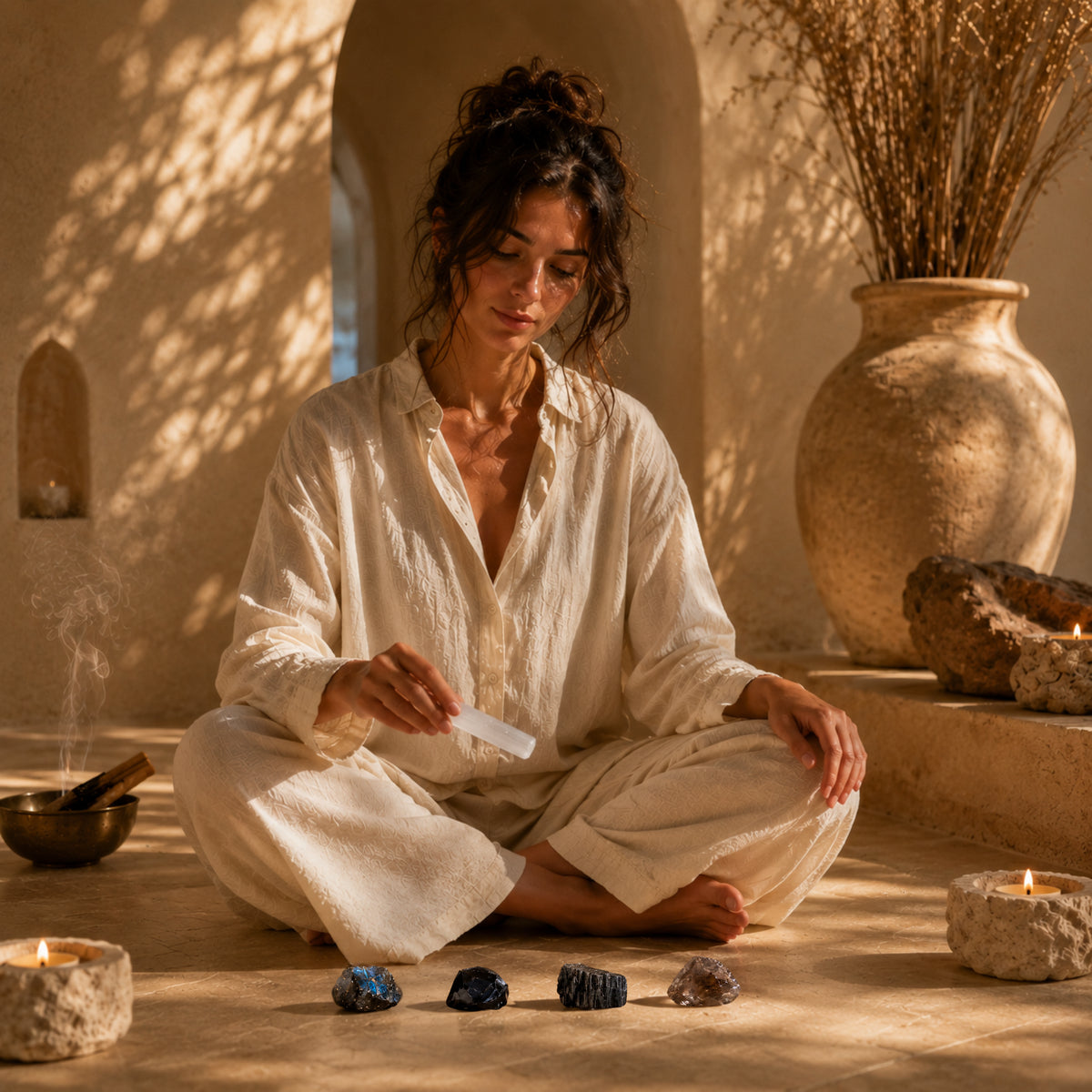
The energy you align with is the reality you create.
Where should we send your code?
Your code is on its way to you.
Not there in a few minutes? Look in your spam or promotions folder.
Cart
Spend $53.76 more for free standard shipping

For your ritual


Taxes and shipping calculated at checkout
By continuing to checkout, you agree to our Terms of Service and Refund Policy.
Botanical, Protection
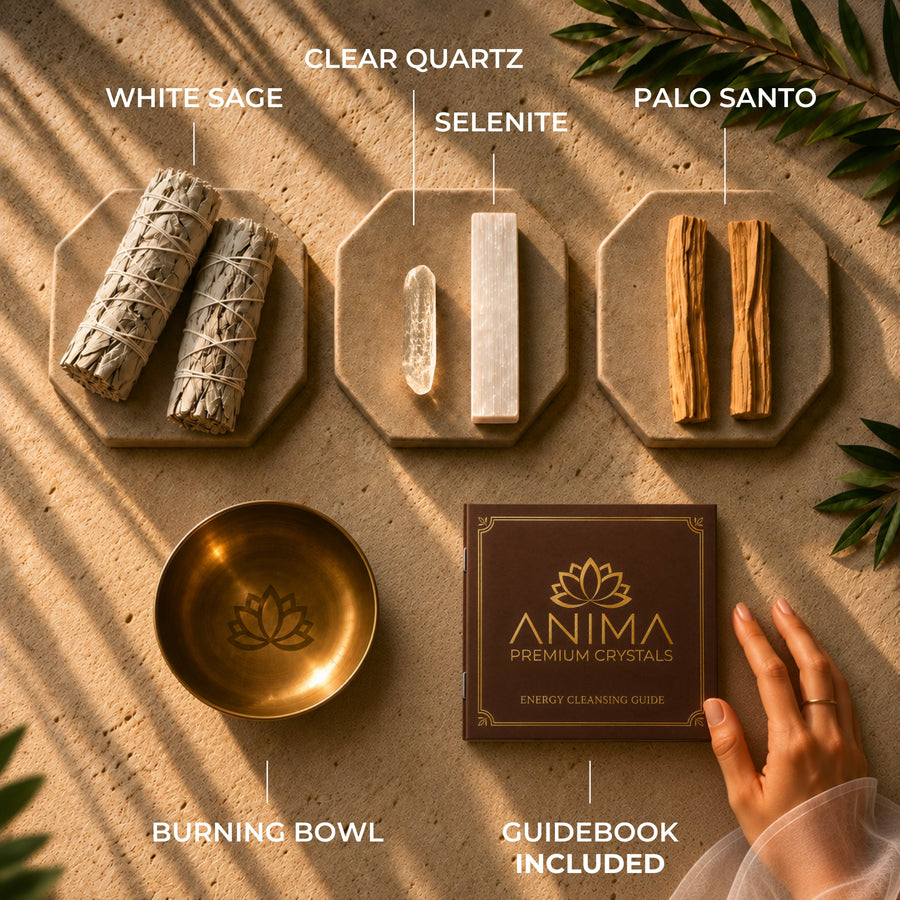
A gentle smoke of welcome: palo santo, the holy wood of Ecuador and Peru, chosen with care.

Palo santo carries a sweet, warm, grounding energy. Light it to open your ritual, and feel the space soften around you.
A scent changes a room before a word is spoken. Palo santo's sweet, woody smoke carries a warm, settling frequency: the state of coming home to yourself. Where sage clears, palo santo welcomes. When you tune into it, you will feel your shoulders drop and the space grow soft and warm. The wood opens the door. What you invite in is yours to choose.
Tune into
ANIMA energy
ProtectionA sweet, warm energy for your space.
What it brings youYour home feels welcoming and warm.
It is the second step of the ANIMA ritual: palo santo invites.
A soft, settling energy.
What it brings youA calmer mood, as the scent fills the room.
Its smoke is gentle and sweet, with hints of citrus and mint.
An earthy, woody energy.
What it brings youYou feel settled and present.
It comes from the dry forests of South America.
An energy of welcome and gratitude.
What it brings youEach space you bless feels cared for.
Its name means "holy wood" in Spanish.
A grateful connection to the earth.
What it brings youGratitude for what nature gives.
The best palo santo comes from fallen wood that rests on the forest floor for years.
Breathe in, 4 · Breathe out, 6
Light the tip of your palo santo, let the flame go out and watch the smoke rise. Follow the orb: in for four, out for six. Five slow breaths are enough to welcome warmth in.
What you notice
“I welcome warmth and calm into this space.”
Once it is out, leave the stick in its bowl where you can see it. Its scent lingers, and so does your intention.
Walk slowly through the room as the smoke drifts into corners and doorways.
Hold the stick near an object you want to dedicate: the smoke carries the blessing.
When the smoke clears, sit a moment: light a candle, write a line or breathe.
Light it. Hold the stick at a 45-degree angle, light one end and let it burn for 30 to 60 seconds. Then gently blow out the flame and let the wood smoke.
Invite warmth in. Walk slowly through the room, letting the smoke drift into corners and doorways, or hold the stick near an object you want to dedicate. Name what you are welcoming in, in a few words, and let the smoke carry the blessing.
Let it go out. Palo santo usually goes out on its own after a minute or two. Rest it in a fireproof bowl until no smoke remains. The same stick can be relit many times.
Pair it with a pause. When the smoke has cleared, sit for a moment before you move on. Light a candle, write a line in a journal, or simply take three slow breaths.
The name palo santo most often means Bursera graveolens, a tree of the dry tropical forests of the Americas. Its wood, rich in aromatic oils, burns with a sweet, woody smoke.
Palo santo, Spanish for "holy wood", grows in the seasonally dry tropical forests of the Americas, from Mexico to Peru, and on the Galápagos Islands. Much of the wood sold around the world comes from coastal Ecuador and northern Peru.
Its fragrance comes from aromatic oils and resins in the wood. By custom, the wood is gathered from fallen branches and from trees that have died naturally, rather than cut from living trees. When burned, it releases a sweet, woody smoke, softer than sage. The wood is also distilled into an essential oil.
Burned at home and in ceremonies led by curanderos, to clear mala energía.
Spanish speakers give it its name, palo santo: holy wood.
Demand grows worldwide, and it is mixed up with a threatened namesake.
Many families still light it for comfort, for prayer or for its scent.
In parts of Ecuador and Peru, palo santo has long been burned at home and in ceremonies led by curanderos, the traditional ritual specialists of the region, to clear away bad energy, or mala energía, and to bless a space. The story goes that after the Spanish conquest the wood found its way into Catholic rites, and so came by its name. We share it as legend. In many families it is still lit today, for comfort, for prayer or simply for its scent.
As palo santo grew popular worldwide, an important mix-up followed. The name is also used for a different tree, Bulnesia sarmientoi, from the Gran Chaco region of Argentina, Bolivia and Paraguay. That species is threatened, and trade in its wood and oil is regulated under CITES, the international treaty on trade in endangered species. The palo santo burned to clear a space is Bursera graveolens, and it is worth checking that name when you buy.
Store it dry, out of direct sun, in a paper bag, cloth pouch or wooden box.
One stick lasts many sessions: scrape away the charred tip before you relight it.
Let ash cool completely before you throw it away, and keep the bowl on a heat-safe surface.
Store palo santo in a dry place, away from humidity and direct sun, in a paper bag, a cloth pouch or a wooden box. Kept whole and dry, one stick lasts for many sessions.
Before you relight a stick, you can gently scrape away the charred tip or rub it on a rough surface, which helps it catch again. Let ash cool completely before you throw it away, and keep your bowl on a heat-safe surface.
From the ANIMA collection
Mentioned in this guide
 3 pieces, chosen together
Centered before you meet the world.
In your bundle
The energy quiz
Which energy is seeking you?
A few quick questions reveal the energy calling you now.
Zodiac crystal sets
Find your zodiac crystals
Six crystals that carry the energy of your sign.
Good to know
Palo santo is warmth and welcome. Once a space is clear, its soft, woody smoke fills it the way a home fills when someone you love walks in. Light it with your intention and you will feel your breath slow. You are the creator.
Bursera graveolens, the palo santo burned in ritual, is listed as Least Concern by the IUCN, though local populations can suffer from overharvesting. The threatened species is Bulnesia sarmientoi, a different tree from the Gran Chaco that shares the name. Choosing Bursera graveolens from fallen wood, from a seller who states its origin, is the kinder choice for the forests it grows in.
Each time you light it, only the tip burns, usually for a minute or two before it goes out on its own. Kept dry, a single stick can be relit for many sessions.
Both are burned to clear and renew a space, but they are different plants from different places. White sage is a shrub from southern California and Baja California, with a strong, herbal smoke that clears. Palo santo is a South American wood with a sweeter, softer scent that welcomes warmth in. Both are sacred in the cultures they come from, and both deserve careful sourcing.


