

Yellow Calcite
- Clarity
- Confidence
- Decisions
The energy you align with is the reality you create.
Where should we send your code?
Your code is on its way to you.
Not there in a few minutes? Look in your spam or promotions folder.
Cart
Spend $55.01 more for free standard shipping

For your ritual


Taxes and shipping calculated at checkout
By continuing to checkout, you agree to our Terms of Service and Refund Policy.
Crystal
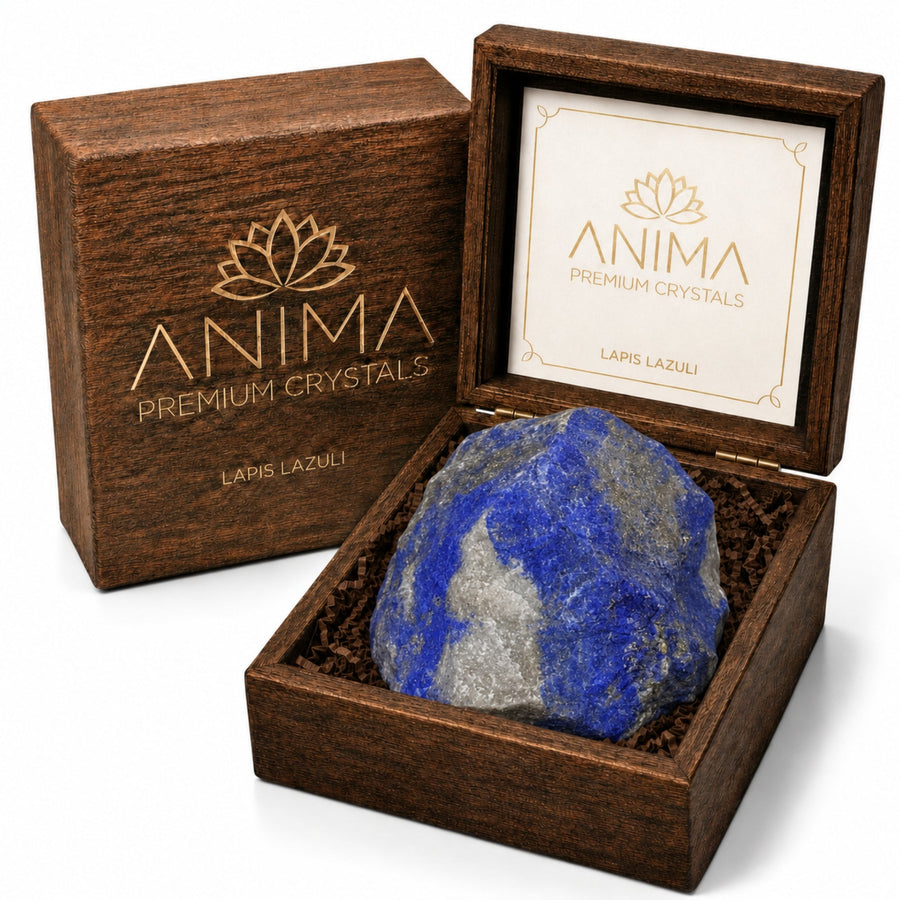
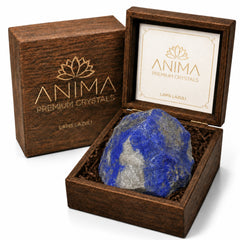
Deep blue and flecked with gold, lapis lazuli carries the energy of truth and a voice that is yours.

Lapis lazuli carries the deep blue energy of truth. Tune into it to speak from who you really are.
Words carry a frequency, and so does silence. Lapis lazuli holds the deep, starry vibration of a night sky: wise, spacious, honest. Its energy is the state of a voice that matches the heart. When you tune into it, you will feel your thoughts slow and the true words rise. Give them your voice.
Tune into
An energy that awakens your authentic voice.
What it brings youYou say what you mean, kindly and clearly.
It is the crystal of the throat, the energy center of truth and voice.
A deep, knowing energy.
What it brings youYou trust what you know, and you speak from it.
For 6,000 years it was carried from Afghanistan to the courts and temples of the ancient world.
A clear connection to your intuition.
What it brings youYour inner voice and your spoken voice agree.
Its deep blue sits between the blue of the throat and the indigo of the third eye.
An honest, open energy.
What it brings youFewer half-truths, to others and to yourself.
Its golden flecks of pyrite shine like stars in a night sky.
A calm, royal blue stillness.
What it brings youA steady calm when the conversation matters.
Blue is the color of deep water and the evening sky.
Light is energy in motion, and every color vibrates at its own frequency. Blue waves are short and fast, the color of clear sky and deep water. Lapis lazuli carries a blue so deep it borders on indigo, the color of the throat and the third eye.
Its blue comes from lazurite, a mineral whose sulfur gives it that intense color. White veins are calcite, and the golden flecks are pyrite.
Its shades
The bright, even blue of the finest lapis. Clear, confident expression.
The deep blue from Badakhshan, mined for 6,000 years. Wisdom and depth.
A lighter blue with more white calcite. A softer, open voice.
Lapis lazuli works with your throat and third eye, where truth and inner sight meet.
Between the brows. Intuition, imagination and the quiet knowing behind a choice.
At the throat. Truth, voice and the courage to say what you mean.
Breathe in, 4 · Breathe out, 6
Hold your lapis lazuli near your throat and follow the orb: in for four, out for six. On your last breath out, hum softly.
What you notice
“I speak my truth with kindness.”
Rest it beside your phone: a flecked blue pause before every call, and a cue to speak as yourself.
Rest it on your journal and write freely for five minutes without editing.
Lying down, rest it on your brow and listen inward.
On your nightstand: note one insight from the day before you turn out the light.
Before you speak. Hold it for three slow breaths before a meeting, a call or a hard conversation, and decide the one thing you most want to say.
Morning pages. Rest it on your journal and write freely for five minutes without editing a word.
In stillness. Lie down, rest the crystal on your brow or in your open palm, and listen for the quiet voice beneath your thoughts.
At night. Keep it on your nightstand and note one insight from the day before you turn out the light.
Lapis lazuli is a rock, not a single mineral: deep blue lazurite with white veins of calcite and gold flecks of pyrite. The finest has long come from Badakhshan, in Afghanistan.
Its deep blue comes mainly from lazurite, a mineral of the sodalite group, with white veins of calcite and glinting flecks of pyrite. It usually forms in marble, where limestone has been transformed by heat and mineral-rich fluids deep underground. Because it is a mix, its hardness varies: GIA rates it at 5 to 6 on the Mohs scale, with only fair toughness.
The finest material has long come from the Sar-e-Sang mines in Badakhshan, in northeastern Afghanistan, with other sources in the Coquimbo region of Chile and the Lake Baikal region of Russia. The name joins the Latin lapis, "stone," with lazulum, a medieval Latin word that came through Arabic from Persian. The same root gave English the word azure.
Lapis is already in use, one of the oldest traded gem materials.
Lapis and carnelian beads adorn the headdress of Queen Puabi at Ur.
Ground into ultramarine, it becomes the most precious blue in Europe.
A synthetic ultramarine arrives at a fraction of the cost.
Lapis lazuli is one of the oldest gem materials people have traded, in use since the fourth millennium BCE. Around 2600 to 2500 BCE, beads of lapis, most likely from far-off Afghanistan, adorned the headdress of Queen Puabi at Ur, in Mesopotamia. In Egypt, lapis inlays outline the eyes and eyebrows of Tutankhamun's gold mask.
Ground to powder and purified, lapis became ultramarine, from the medieval Latin ultramarinus, "beyond the sea." Some of the earliest known ultramarine paintings are Buddhist cave murals at Bamiyan, in Afghanistan, from around the sixth and seventh centuries. In Europe it became the most precious blue of the Middle Ages and the Renaissance: the best grades were worth more than gold, and painters reserved the finest for the robes of the Virgin Mary. A synthetic ultramarine arrived in the 1820s at a fraction of the cost.
 Lapis Lazuli and Clear quartz
Amplifies lapis lazuli's energy around the truth you want to speak.
Explore Clear quartz
 Lapis Lazuli and Labradorite
Truth meets intuition, a pair for the throat and the third eye.
Explore Labradorite
 Lapis Lazuli and Amethyst
Wisdom meets calm, for a clear inner voice.
Explore Amethyst
Wipe it with a soft cloth and keep it dry. Never soak it.
Handle it gently, away from heat, acids, perfume, household cleaners and solvents.
Renew it the dry way: with smoke, a bell or singing bowl, or moonlight.
Lapis lazuli is softer and more porous than many crystals, so handle it gently. GIA recommends warm, soapy water as the safest way to clean it: wipe it with a damp cloth or rinse it quickly, then dry it at once. Never soak it, since water can dull its polish and encourage its pyrite to tarnish. Avoid steam and ultrasonic cleaners, heat, acids, perfume, household cleaners and solvents such as acetone or alcohol, which can also strip the dye from colored pieces. Store it on its own so harder crystals do not scratch it.
Renew lapis only in dry ways: a pass through incense or herb smoke, the sound of a bell or singing bowl, or a night in moonlight, then speak your intention once more. Skip water and salt rituals, which are hard on lapis.
From the ANIMA collection
Mentioned in this guide
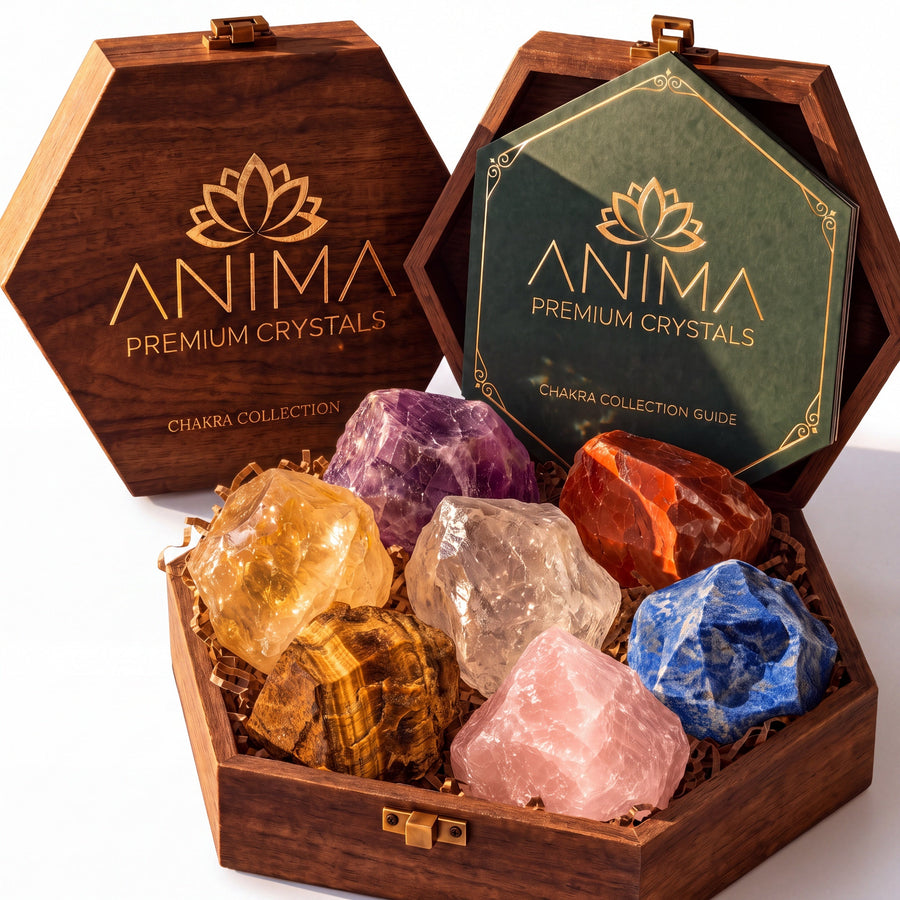
 3 pieces, chosen together
A few unhurried minutes to hear yourself again.
In your bundle
The energy quiz
Which energy is seeking you?
A few quick questions reveal the energy calling you now.
Zodiac crystal sets
Find your zodiac crystals
Six crystals that carry the energy of your sign.
Good to know
Lapis lazuli carries the deep blue energy of truth, wisdom and authentic self-expression. Its vibration is where an honest voice meets inner knowing. Before you speak, hold it and set your intention, and you will feel your words rise from a truer place. You are the creator.
Briefly, yes. A quick wipe or rinse in warm, soapy water is fine, as GIA recommends. Do not soak it, bathe with it or leave it in water, and dry it right away, because it is porous and contains calcite and pyrite.
Natural lapis is rarely perfectly even: look for deep blue with some white calcite and gold pyrite flecks. Sodalite, a common look-alike, is usually a softer, more violet blue with white veins and rarely shows gold flecks. In dyed pieces, color can pool in cracks. For certainty, ask a gemologist.
The flecks are pyrite, a brassy iron sulfide that forms alongside lazurite. Collectors prize Afghan lapis with little or no pyrite or calcite, but many people love the starry look, and a scatter of gold is part of each piece's natural character.


